

Q&A with Kayla Blas, SCJ Master’s ’26
We had the chance to sit down with standout Rutgers SCJ Master’s graduate Kayla Blas ’26, who shared experiences, difficulties, and advice for students considering higher education.
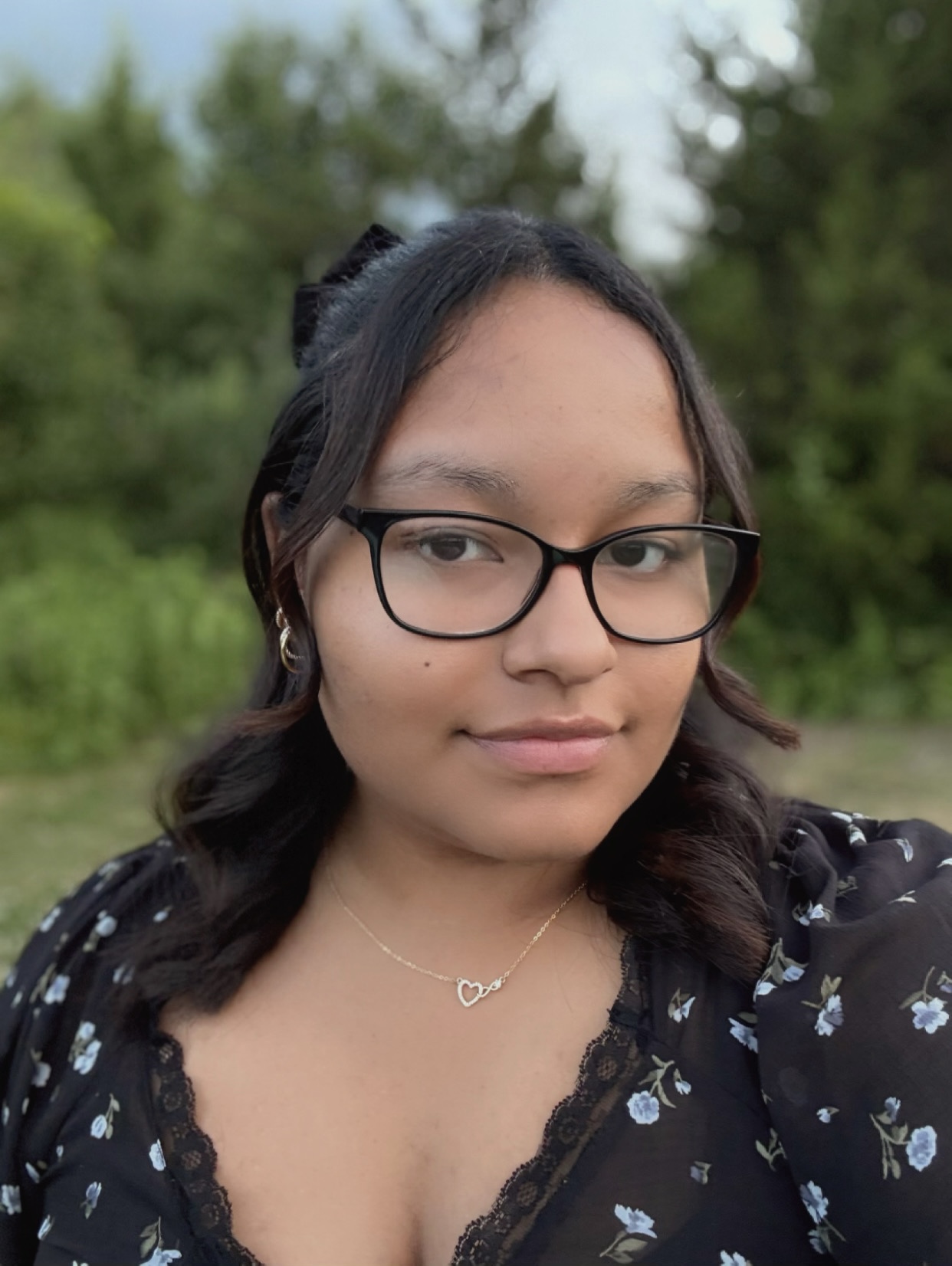
Q: Tell us a little about yourself and your path to college.
I grew up in New Jersey in a single-parent household. Both of my parents were Veterans, and education was always something that was valued in our family. I lived near Princeton, surrounded by strong schools and universities, but growing up, college sometimes felt uncertain because of financial concerns. I remember questioning whether a four-year degree was realistic for me because I didn’t really have a blueprint to follow. My mom had tried pursuing school while balancing work and the responsibility of raising me, and unfortunately, she had to stop and restart her education multiple times. Watching that showed me how difficult higher education can be when you’re carrying so many responsibilities at once. In many ways, I felt like I was creating my own path while also learning from her perseverance and determination. I’m also Hispanic and very proud of my background, but I wanted to be somewhere where people weren’t judged by where they came from. I wanted to be part of a community where what really mattered was what you brought to the table, your work ethic, and the kind of person you are.
Q: What led you to pursue criminal justice?
Originally, I wanted to study science because I was fascinated by viruses and infectious diseases. Then COVID happened during my junior year of high school, and everything changed. During that time, I started thinking differently about the future and what role I wanted to play in helping people. Growing up with my mom, who was a Veteran and deeply committed to public service, I was always around that mindset. Once I began considering criminal justice, I realized, ‘Why wasn’t this my thing all along?’ I was also always drawn to detective work and problem-solving. As an only child, I spent a lot of time doing puzzles and challenging myself in different ways. Solving problems always came naturally to me, and that eventually connected with my interest in criminal justice. At first, I thought criminal justice was simply “catching bad guys and stopping crime”. But once I started learning more, my perspective completely changed. I learned that criminal justice is really about protecting communities, helping people rebuild their lives, and showing people they don’t have to become a statistic. That shift made me love the field even more.
Q: Why did you choose Rutgers-Newark School of Criminal Justice?
My mom worked for Rutgers, so growing up I was already familiar with the university, but everything really changed when I discovered the dual-degree program that allowed me to earn my master’s degree in an accelerated timeline. Once I learned about that opportunity, I remember thinking, I can actually do this. For me, it wasn’t just about choosing a school it was about finding a path that felt achievable. So finding a program that was practical, structured, and realistic for my goals meant a lot to me. The tuition support also played a huge role in making higher education feel accessible. I was also really drawn to Rutgers–Newark because of the location. I liked being in more of a city environment, especially since it’s only one train stop away from New York City. Coming from a quieter area, it pushed me outside of my comfort zone in a good way and helped me become more independent. Being in that environment also helped me get more comfortable navigating spaces and situations that once felt intimidating, which honestly helped prepare me for the field I want to work in. Once I saw everything the School of Criminal Justice offered, especially the opportunities for internships, networking, and hands-on experience, I honestly didn’t feel the need to look anywhere else. It felt like the right fit for both my personal and professional goals.
Q: What made your experience at the School of Criminal Justice stand out?
Without question, the relationships with professors. Throughout school, I balanced classes with internships and jobs because I wanted to make sure I had experience lined up after graduation. My professors understood that. They knew when I was coming from work or heading to work after class. I also went through some difficult personal experiences during undergrad and lost several people close to me. My professors were incredibly understanding and supportive during that time. The smaller class sizes make a huge difference because professors actually know who you are. Faculty members like Bonita Veysey and Dr. Jason Silver had a tremendous impact on me. Dr. Silver made sure nobody left class confused, and Bonita made every interaction feel personal. Even after taking multiple classes with her, she remembered conversations we had semesters earlier. That level of care meant a lot to me.
Q: How did internships and hands-on experiences shape your journey?
I learned quickly that one of the most important things you can do is pay attention to your email. I received an email from Dean Camacho about volunteer opportunities with a TSA canine unit. At the time, becoming a Federal Air Marshal was my dream job, so I signed up immediately. I was only 19 and had just started college, but that opportunity gave me my first real step into the field, and I still volunteer with them today. After that, everything started building on itself. I participated in the Rutgers Scarlet Service Internship (RSSI) program, worked at a food pantry, interned at my county sheriff’s office, and later worked in county courts. Each experience gave me a new perspective, and everything I was learning in class started connecting to real-world experiences. Today, I work as an Arbitration Specialist in the Civil Division, and I recently accepted a full-time position as a Probation Officer beginning this summer in New Brunswick. Looking back, it really feels like everything came together.
Q: What are some of the most important skills you gained during your time at Rutgers?
One of the biggest things I learned was data analysis and statistics. Dr. Silver especially changed the way I think about information. He taught us not to simply accept statistics at face value, but to ask questions and understand the story behind the numbers. In high school I used to wonder, When am I ever going to use this math in real life? Now I realize how much research and analysis impacts criminal justice work. I also learned how to become my own advocate. One of the biggest adjustments in college was realizing that your success really depends on the effort you put in. You have to learn how to speak up for yourself, ask for opportunities, and take responsibility for your own growth. I remember wanting to take a class that was already full, so I showed up anyway and sat in the classroom. I introduced myself to the professor after class and asked if I could join. He gave me the special permission number to join the class. I kept pushing myself to take opportunities, even when I wasn’t fully confident.
Q: You mentioned experiencing imposter syndrome. How did you navigate that?
I struggled with imposter syndrome for a long time, especially as I was nearing completion of my master’s degree. I was often the youngest person in the room, and sometimes I would look around and wonder if I really belonged. For me, imposter syndrome looked like constantly second-guessing myself. There were moments where I questioned whether I had actually retained everything I learned during undergrad. I also questioned whether I was truly worthy of the opportunities I was receiving or if people assumed things came easier to me because my mom worked for Rutgers. At times, I found myself wondering, Was this acceptance into college handed to me, or did I really earn this? Because of that, I felt like I constantly needed to prove myself. I studied all the time and pushed myself academically and professionally because I wanted to know that every opportunity I received was something I genuinely earned through my own effort. During the RSSI program, I finally heard someone put a name to what I was feeling. Realizing that other people experienced it too helped me understand that I wasn’t alone. Over time, I started gaining confidence by completing milestones and seeing tangible proof of my growth. Every internship, volunteer experience, job opportunity, and accomplishment that I added to my resume reminded me that I was actively building a career in the field I loved. Seeing that progression helped me realize that my achievements were the result of hard work and persistence. I leaned heavily on peers, advisors, my family, and my faith. Eventually, I was able to look back at everything I had accomplished and think, Wow, I actually did all of this. Winning the Director’s Award for Practical and Professional Excellence also reminded me that I had earned every opportunity along the way. I still have moments where I doubt myself, but now I’ve learned that growth often comes from putting yourself in rooms that challenge you.
Q: What are your goals for the future?
I want to continue making a difference through criminal justice and public service. As a probation officer, my goal is to help people become productive citizens, successfully reintegrate back into society, and avoid returning to the system. What draws me to probation is the balance between accountability and support. I think people underestimate how important guidance and stability can be during someone’s transition back into society. Public service has always been a major part of my life growing up, especially with both of my parents being Veterans, so I’ve always been drawn to careers where I can make a direct impact on people and communities. Long term, I would love to continue working in government and potentially work for a federal agency. My interest in federal service has stayed with me throughout my college experience. I also want to continue growing professionally, taking on new challenges, and building meaningful relationships throughout my career. Hopefully, five to ten years from now, I’m still doing work that I genuinely love and making a positive impact in the lives of others.
Q: What advice would you give prospective students?
Be your own advocate! You really have to be your own biggest supporter and go after every opportunity you want. I always believed in working hard first and then enjoying the reward afterward. There were days when I spent entire days in the library just so I could finish everything and actually enjoy my weekends without stressing about assignments. Don’t procrastinate, and don’t be afraid to ask for help. I never wanted to just get the grade — I wanted to actually understand the material and build skills I could use later in life. I was nervous about coming to Rutgers-Newark because all I knew was Rutgers New Brunswick, but I found something that fit me perfectly. You still get the college experience, but you also get smaller classes, personal connections, and professors who genuinely invest in you. If I had to describe my experience in three words, it would be: Transformative. Unexpected. Achievable. One practical tip I got from an alum during my campus tour was to always bring extra socks if you’re commuting because the puddles around campus are deeper than they look. I actually bought a whole pack before starting school, and thankfully I did because there were definitely days I needed them. It sounds minor, but when you’re on campus all day, little things like that can make a huge difference.